Monday, April 13, 2020

Apple's Contact Tracing System Will Require Verification When Users Report Testing Positive for COVID-19

https://ift.tt/2Xy5MhV

Apple today in a press briefing indicated that its upcoming COVID-19 contact tracing system with Google will have a verification flow, meaning that users will be required to submit proof in order to report that they have tested positive for the disease.

As an example, Apple said that a person who tests positive for COVID-19 could receive a QR code with their test results and then scan that QR code within the contact tracing system for confirmation purposes, but the exact implementation remains to be seen. Apple said verification will be handled by an external entity and could vary by region.

Verification will be a very important step in Apple's and Google's contact tracing system, preventing users from falsely reporting that they have tested positive for COVID-19 and inflicting unnecessary worry on others.

Apple also ensured that the contact tracing system will not be enforced by governments and will instead function on an opt-in basis.

Apple and Google revealed plans for their contact tracing system earlier this week. The joint effort will use Bluetooth to alert users when they have potentially come in close contact with someone who later tests positive for COVID-19, while respecting user privacy.
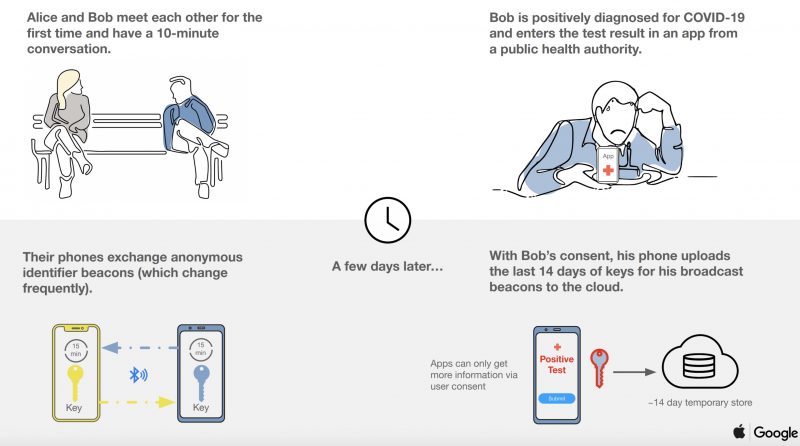
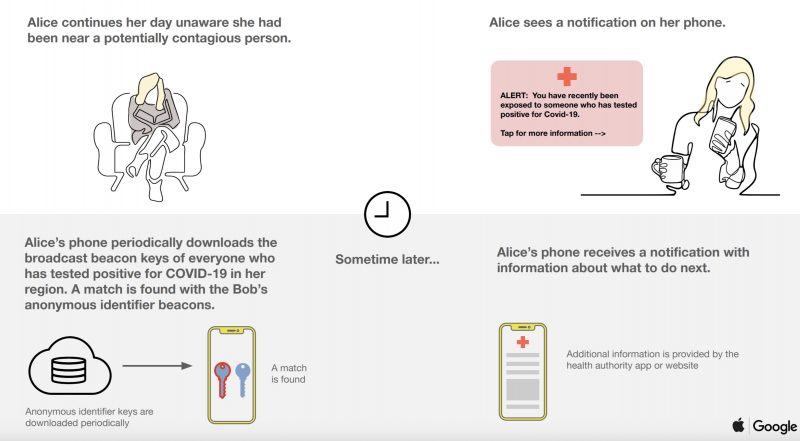

Read our coverage of the announcement for more details.
This article, "Apple's Contact Tracing System Will Require Verification When Users Report Testing Positive for COVID-19" first appeared on MacRumors.com

Discuss this article in our forums


from MacRumors: Mac News and Rumors - All Stories https://ift.tt/3cgaB3n

HomePod Operating System Now Based on tvOS Instead of iOS Amid Rumors of Smaller HomePod

https://ift.tt/2RPUUqU

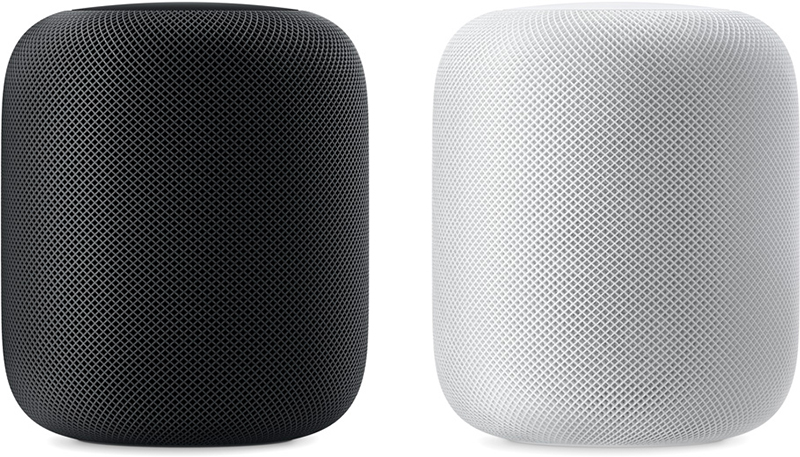
Apple in March released new 13.4 software designed for the HomePod, alongside of the release of iOS 13.4 and tvOS 13.4. 9to5Mac recently looked at the ‌HomePod‌ code and says that Apple made a curious change with the new software -- the ‌HomePod‌ operating system is now based on tvOS instead of iOS.


watchOS, tvOS, and the software that run on the ‌HomePod‌ are all variants of iOS, but each one is differentiated by tweaks made for the device the software is intended to run on, featuring unique interfaces, APIs, and more.

Unlike prior versions of the ‌HomePod‌ software, which were based on the operating system found on the iPhone and iPad, the ‌HomePod‌'s software is now derived from tvOS. Because the operating systems are the same at the core, this hasn't resulted in any fundamental changes to the way that the ‌HomePod‌ works.

9to5Mac believes that shifting the ‌HomePod‌ software to a tvOS base has the potential to save Apple some work, as both the Apple TV and the ‌HomePod‌ are always-on devices that are plugged in to power and won't need the same optimizations as versions of iOS. Both devices also operate as a Home hub for HomeKit, which may also be a key reason why the two now share code.

It's also possible that iOS 14 will end support for devices with the A8 chip, such as the ‌iPad‌ Air 2 and the ‌iPad‌ mini 4, and the ‌HomePod‌ is equipped with an A8 chip. Due to the possible end of support in ‌iOS 14‌, swapping over to a tvOS base will allow Apple to keep pushing ‌HomePod‌ updates for the foreseeable future.

Rumors have suggested that Apple is developing a new smaller version of the ‌HomePod‌ that's more affordable, which is set to launch in 2020, and that's another possible reason for the code shift. 9to5Mac says that there are two new models of the ‌HomePod‌ referenced in iOS 13.4, though there is no additional information about them.

Just this morning, a Bloomberg report said that Apple is working on a new HomePod speaker that will be about half the size of the original, while maintaining the same design. Though it has faced delays, Apple is planning to launch the new ‌HomePod‌ in the second half of the year. It will feature a lower price the current ‌HomePod‌, helping Apple compete with cheaper speaker options from companies like Amazon and Google.

On a separate but related note, 9to5Mac says that a "trusted source" has said that the next-generation ‌Apple TV‌ that's been rumored for months now could be equipped with the same A14 chip that Apple is planning to use in the iPhone 12, which suggests a fall launch for the device. Both a new ‌Apple TV‌ and an updated ‌HomePod‌ could perhaps see similar launch dates this September or October, but there's no concrete word on launch timing for either product.
Related Roundup: HomePod
Buyer's Guide: HomePod (Neutral)

This article, "HomePod Operating System Now Based on tvOS Instead of iOS Amid Rumors of Smaller HomePod" first appeared on MacRumors.com

Discuss this article in our forums


from MacRumors: Mac News and Rumors - All Stories https://ift.tt/2V3SfwP

Apple Sends Letter to Senators Confirming Privacy and Security of COVID-19 App

https://ift.tt/2XnPA2E

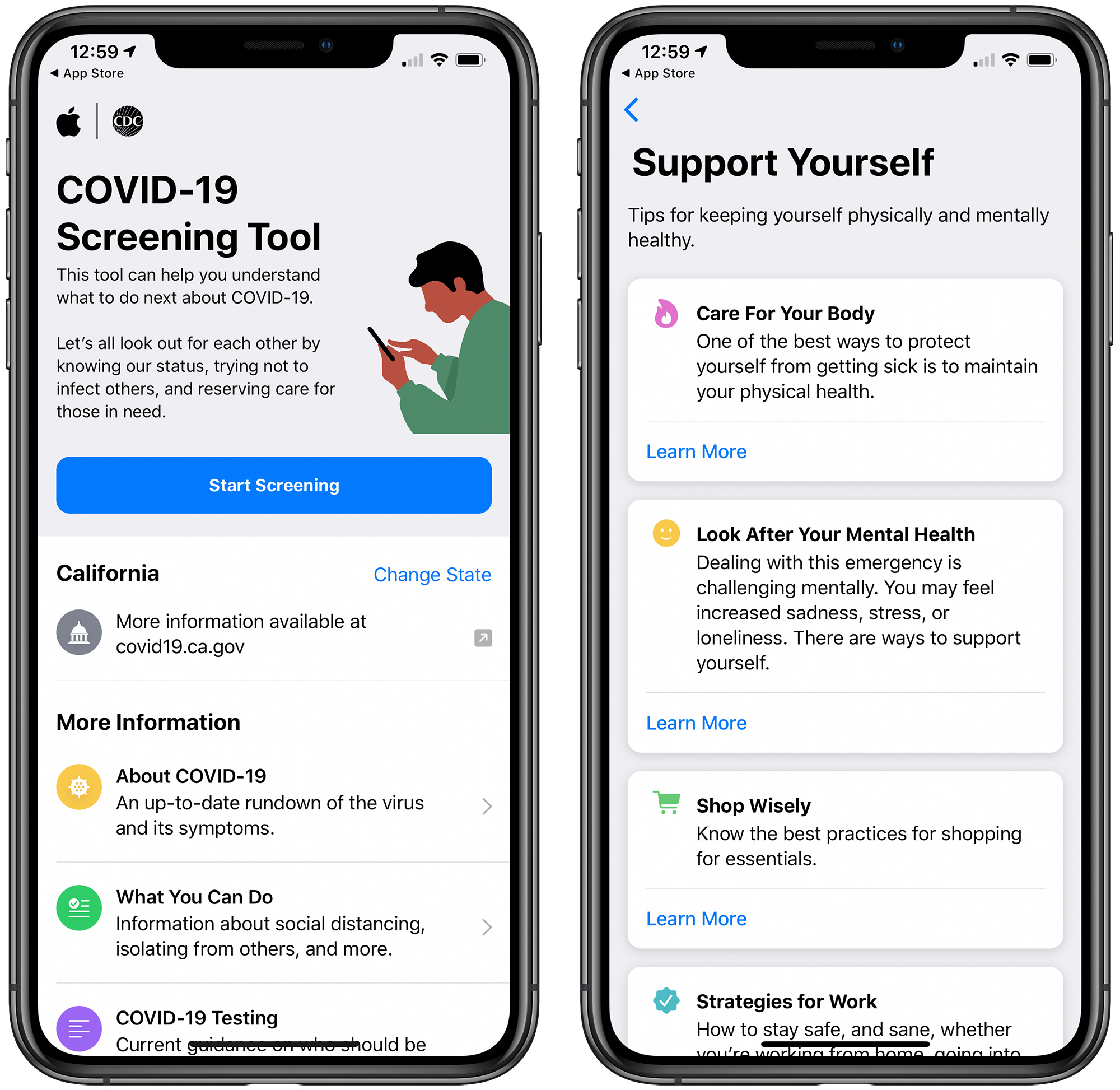
Apple last week sent a letter to a group of U.S. senators who had questioned the privacy and security of the COVID-19 app and website that Apple designed in partnership with the the CDC, the White House Coronavirus Task Force, and FEMA.


In the letter [PDF], published on Friday and highlighted today by Bloomberg, Apple provided specific answers to each of the questions the senators had asked, and clarified that the app and website were built with privacy as a priority.
Consistent with Apple's strong dedication to user privacy, the COVID-19 app and website were built to protect the privacy and security of users' data. As you note, use of the tools do not require a sign-in or association with a user's Apple ID, and users' individual responses are not sent to Apple or any government organization. Access to important information and guidance regarding individual health or the health of a loved one should not require individuals to compromise their privacy rights. Rather, it is in times like these, that our commitment to protecting those rights is most important. Our COVID-19 app and website were designed with that in mind.
The senators asked for specific details on Apple's agreements with the federal government and/or state governments, with Apple clarifying that Apple entered into an agreement with HHS through the Office of the Assistant Secretary of Health and the CDC for the development of the website.

Strong privacy terms were included, such as express consent required for any data transfer, the aggregation and de-identification of any information received by the CDC, and an agreement that any information obtained by the app is strictly to be used for improving the COVID-19 Triage Tools that are included.

The letter clarifies that the app and the screening site are not covered or subject to HIPAA laws in the United States as no health insurance companies or health care providers are privy to the information.

Apple says it does not collect any information entered into the website or the app, and applies the same data minimization principles to the COVID-19 tool as it does to other products. The only data that is stored is data necessary to support the operation of the app, which includes non-personally identifiable analytics information regarding the use of the website and app, such as total number of visits, whether crashes have occurred, and whether the screener tool has been startred, cancelled, or completed.

Apple confirmed that it commits to refrain from using data collected on the website and app for commercial purposes, and will never sell information to third-parties. Apple's full letter to the U.S. senators can be read on the web for those interested.

The COVID-19 app and website have been available since late March, and Apple recently improved both tools with links to state guidelines and self-care information. Apple late last week also announced a new partnership with Google that will see the two tech companies developing a privacy-focused opt-in contact tracing tool that will be added to iPhone and Android smartphones.
This article, "Apple Sends Letter to Senators Confirming Privacy and Security of COVID-19 App" first appeared on MacRumors.com

Discuss this article in our forums


from MacRumors: Mac News and Rumors - All Stories https://ift.tt/3a8RlmS

Google Meet is missing one big feature from Zoom, but this extension fixes it


via Chrome Unboxed – The Latest Chrome OS News https://ift.tt/2K2h59X

How to securely set up your own Chromebook for your kid’s remote school learning


via About Chromebooks https://ift.tt/2K3Jexj

Anker Launching New HomeKit-Compatible Indoor Security Cameras Next Month

https://ift.tt/3a43Lwn

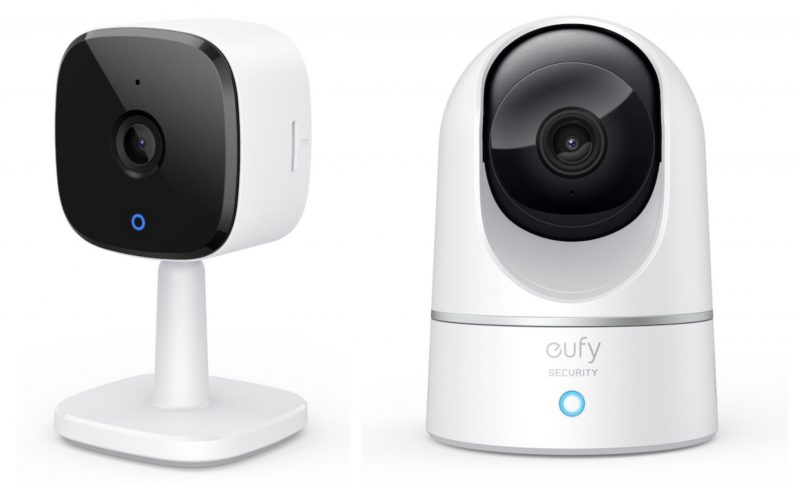
Anker recently announced pricing and availability for two new HomeKit-compatible indoor security cameras under its Eufy brand.


Both cameras feature 24/7 live video recording with up to 128GB of local storage, 2K resolution, two-way audio, motion tracking with customized activity zones, instant alerts, and multi-user access. A stationary version will be available for $39.99, while a pan-and-tilt version with 360° horizontal panning, 100° vertical tilting, and 8X zooming will retail for $49.99.

Anker says both cameras will be available on Amazon in mid-May.
Tags: HomeKit, Anker

This article, "Anker Launching New HomeKit-Compatible Indoor Security Cameras Next Month" first appeared on MacRumors.com

Discuss this article in our forums


from MacRumors: Mac News and Rumors - All Stories https://ift.tt/2XwG3Gv

The Samsung Galaxy Chromebook’s extravagance helps me appreciate the Pixelbook Go’s understated brilliance


via Chrome Unboxed – The Latest Chrome OS News https://ift.tt/3ccBi98