Wednesday, June 26, 2019

Google Now Rolling Out Auto-Delete Controls for Location History

https://ift.tt/2ZSoYop

Google in May announced a new privacy-focused auto-delete option for automatically removing Location History and Web & App Activity after a set period of time, and the feature is now rolling out to Google users.

Google users who have these options enabled can choose to delete their information manually, every three months, or every 18 months. Opting in to auto-delete will allow Google to regularly clear out stored data at either the three or 18 month mark.


Prior to the implementation of the new feature, Google allowed Location History and Web & App Activity to be disabled or manually deleted, but there were no controls for regular deletion, which may encourage more people to use functions like Location History.

Location History tracks the locations that you've visited, while Web & App Activity tracks websites you've visited and apps that you've used. Google uses this information for recommendations and cross device syncing.

Auto-delete options for Location History are rolling out around the world starting today on iOS and Android, with the rollout expected to take a few weeks. Auto-delete options for Web & App Activity will be coming later.

Tag: Google

This article, "Google Now Rolling Out Auto-Delete Controls for Location History" first appeared on MacRumors.com

Discuss this article in our forums


from MacRumors: Mac News and Rumors - All Stories https://ift.tt/2Yj5Yis

How to fix broken Touch ID on iPhone or iPad

https://ift.tt/eA8V8J

The Touch ID fingerprint sensor in many iPhones and iPads - and even the current MacBook Pro - is a handy timesaver and security feature, but sometimes it goes wrong. Our essential troubleshooting fixes shows what to do if Touch ID isn't working

from Latest iPhone Articles from Macworld UK https://ift.tt/2NpCE8O

Apple Releases Safari Technology Preview 86 With Bug Fixes and Performance Improvements

https://ift.tt/1RqQQYZ

safaripreviewiconApple today released a new update for Safari Technology Preview, the experimental browser Apple first introduced three years ago in March 2016. Apple designed the Safari Technology Preview to test features that may be introduced into future release versions of Safari.

Safari Technology Preview release 86 includes bug fixes and performance improvements for JavaScript, Web Assembly, WebRTC, Web API, CSS, Security, Experimental Web Shading Language, WebGPU, and Web Inspector.

The new Safari Technology Preview update is available for both macOS Mojave and macOS Catalina, the newest version of the Mac operating system that was introduced at the June Worldwide Developers Conference.

The Safari Technology Preview update is available through the Software Update mechanism in the Mac App Store to anyone who has downloaded the browser. Full release notes for the update are available on the Safari Technology Preview website.

Apple’s aim with Safari Technology Preview is to gather feedback from developers and users on its browser development process. Safari Technology Preview can run side-by-side with the existing Safari browser and while designed for developers, it does not require a developer account to download.


This article, "Apple Releases Safari Technology Preview 86 With Bug Fixes and Performance Improvements" first appeared on MacRumors.com

Discuss this article in our forums


from MacRumors: Mac News and Rumors - All Stories https://ift.tt/2Nu299p

Chrome OS 75 Stable version arrives: Here’s what you need to know


via About Chromebooks https://ift.tt/2ZOnNGw

How to take Live Photos on iPhone

https://ift.tt/eA8V8J

Want to take Harry Potter-like moving photos on your iPhone and share them with your friends and family? Here's how to use Live Photos on iPhone

from Latest iPhone Articles from Macworld UK https://ift.tt/2FBjarD

Apple Hires ARM's Lead CPU Architect Amid Rumors of ARM-Based Macs as Early as 2020

https://ift.tt/2X55M9U

Multiple reports have indicated that Apple plans to transition to its own ARM-based processors in Macs starting as early as 2020, and the company recently made a significant hire that lends credence to that objective.
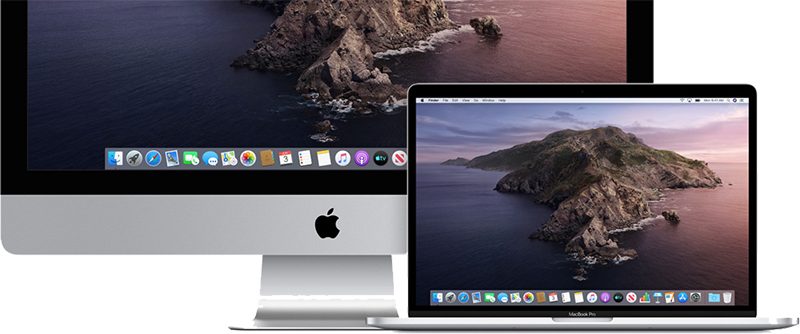

ARM's lead CPU and system architect Mike Filippo joined Apple last month, based out of the Austin, Texas area, according to his LinkedIn profile. Filippo led the development of several chips at ARM between 2009 and 2019, including the Cortex-A76, Cortex-A72, Cortex-A57, and upcoming 7nm+ and 5nm chips.

Filippo also served as Intel's lead CPU and system architect between 2004 and 2009, and he was a chip designer at AMD between 1996 and 2004, so he brings a wealth of chipmaking experience with him to Apple.


Filippo's profile still lists his ARM role as "current," but social media talk suggests that he has left the company.

Apple designing its own ARM-based processors for Macs would allow it to move away from Intel processors, which have frequently faced delays. In fact, sources within Intel reportedly confirmed to Axios that Apple does plan to transition to ARM-based processors in Macs starting next year.

Apple already designs its own A-series chips for the iPhone and the iPad, and it also designs the custom T2 security chip in recent Mac models, as part of its broader efforts to move to in-house components and chip designs. Apple has long been known for closely integrating its hardware and software.

Last year, Bloomberg reported that the transition to ARM-based processors is part of a multi-step process that will eventually allow developers to create one app with a single binary that runs across iPhone, iPad, and Mac. Apple has already laid the groundwork for this with Project Catalyst.

Related Roundup: MacBook Pro
Tags: Intel, ARM
Buyer's Guide: MacBook Pro (Buy Now)

This article, "Apple Hires ARM's Lead CPU Architect Amid Rumors of ARM-Based Macs as Early as 2020" first appeared on MacRumors.com

Discuss this article in our forums


from MacRumors: Mac News and Rumors - All Stories https://ift.tt/2J7kweB