Thursday, February 7, 2019

Future HomePod Could Feature 3D Hand Gestures and Face ID

http://bit.ly/2RHMhNf

A recently published Apple patent application suggests that a future HomePod could feature support for 3D hand gestures, Face ID, and much more.
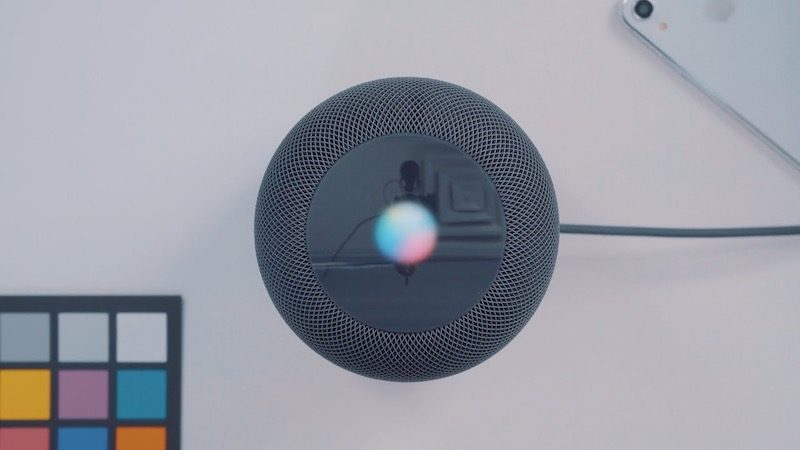

While the patent application does not refer to the HomePod by name, it describes a voice-controlled assistant device such as a "countertop speaker" with various sensors and cameras that "gather hand gestures and other three-dimensional gesture input." This could include waving, clapping, and so forth.

Interestingly, the HomePod could have LEDs woven into the fabric to provide visual feedback for the hand gestures. The LEDs could also be configured to display alphanumeric characters through the fabric that change depending on time of day.

3D hand gesture support on the HomePod could utilize technology Apple gained from its acquisition of PrimeSense in 2013. In 2016, for example, Apple filed a patent for hand gestures on the Mac such as push, up, and wave that could be used to perform basic app interactions like scrolling through a menu.
Gestures described herein include focus gestures and unlock gestures. A focus gesture enables the user to engage (i.e., take control of) an inactive non-tactile 3D user interface. An unlock gesture enables the user to engage a locked non-tactile 3D user interface, as pressing a specific sequence of keys unlocks a locked cellular phone. In some embodiments, the non-tactile 3D user interface conveys visual feedback to the user performing the focus and the unlock gestures.

Examples of unlock gestures include an "up" gesture (e.g., raising hand 30 a specified distance), a sequence of two sequential wave gestures, and a sequence of two sequential push gestures, as described in detail hereinbelow.
PrimeSense's technologies were initially used by Microsoft for its Kinect motion sensor for Xbox. Apple later incorporated some of the technologies into the TrueDepth system that powers Face ID on the iPhone X and newer.

As for Face ID, the patent explains that the HomePod could identify users in the vicinity of the speaker using "facial recognition," as well as measure the distance of users to the speaker. This could allow for biometric authentication of Personal Requests, multiple user profiles, and more on a future HomePod.

In late 2017, the president of Apple supplier Inventec said his company sees a trend towards both facial and image recognition technology being incorporated into smart speakers, without specifying which speakers in particular. This led Apple analyst Jeff Pu to predict the launch of a Face ID-enabled HomePod in 2019.

The exhaustive patent goes on to describe a variety of other potential features for a future HomePod, such as ambient light sensing, displaying a sunshine icon if sunny weather is forecast, displaying the logo of a sports team that wins a game, heart rate sensing, and much more.

One quirky feature mentioned is an emoji-based avatar that would adapt to a user's mood or actions. If the user is sad, for example, the emoji may reflect sadness. Or, if a user asks the HomePod for information on purchasing a birthday gift, the speaker may display a happy emoji to present results.

The patent application was filed with the U.S. Patent and Trademark Office in July 2017, six months prior to the launch of the current HomePod, but it was only published in late January due to a standard 18-month confidentiality period.

Apple files numerous patent applications every week, of course, and many of the inventions do not see the light of day. Patents are also very detailed, encompassing many possible ideas, even ones that Apple might not have any plans to advance. So, the exact implementation if any remains to be seen.

Related Roundup: HomePod
Tag: patent
Buyer's Guide: HomePod (Neutral)

This article, "Future HomePod Could Feature 3D Hand Gestures and Face ID" first appeared on MacRumors.com

Discuss this article in our forums


from MacRumors: Mac News and Rumors - All Stories http://bit.ly/2Dii9mh

Acer Chromebook Spin 13 with Core i5, 8 GB of memory and 128 GB storage: $200 off deal


via About Chromebooks http://bit.ly/2DYFuew

Deals Spotlight: B&H Photo Discounts 256GB 11-Inch Wi-Fi iPad Pro to $799

http://bit.ly/2GdtvMp

B&H Photo is discounting Apple's 11-inch iPad Pro in multiple configurations this week, but one particular model is seeing its lowest-ever price point during the sale. Specifically, the 256GB and Wi-Fi only 11-inch iPad Pro (Space Gray) is priced at $799.00, down from $949.00.

Note: MacRumors is an affiliate partner with B&H Photo. When you click a link and make a purchase, we may receive a small payment, which helps us keep the site running.
This is a limited-time sale and it will last through tomorrow, February 8 at 5:15 p.m. ET (note that only the Space Gray color is being discounted at this time). B&H Photo also has a few cellular iPad Pro models on sale, which you can browse in the list below:

11-inch iPad Pro, Wi-Fi + Cellular


Head to our full Deals Roundup for information on even more sales.

Related Roundup: Apple Deals

This article, "Deals Spotlight: B&H Photo Discounts 256GB 11-Inch Wi-Fi iPad Pro to $799" first appeared on MacRumors.com

Discuss this article in our forums


from MacRumors: Mac News and Rumors - All Stories http://bit.ly/2RMGJRm

Save $200 On These Sweet Samsung Chromebook Plus V2 Models


via Chrome Unboxed – The Latest Chrome OS News http://bit.ly/2tckOti

Apple's Group FaceTime Servers Back Online Following iOS 12.1.4 Launch

http://bit.ly/2SgPnNs

Following the launch of iOS 12.1.4 this morning, which addressed a serious bug in Group FaceTime, Apple has been able to bring its Group FaceTime servers back online.

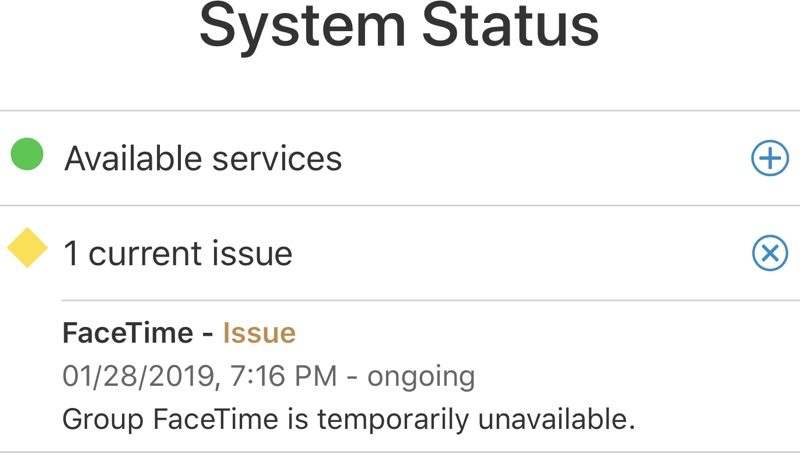
Group FaceTime has been unavailable as a feature on all compatible devices since the FaceTime bug was publicized on Monday, January 28.


As Apple worked on a permanent fix for the bug, the company disabled the Group FaceTime feature to prevent it from being used.

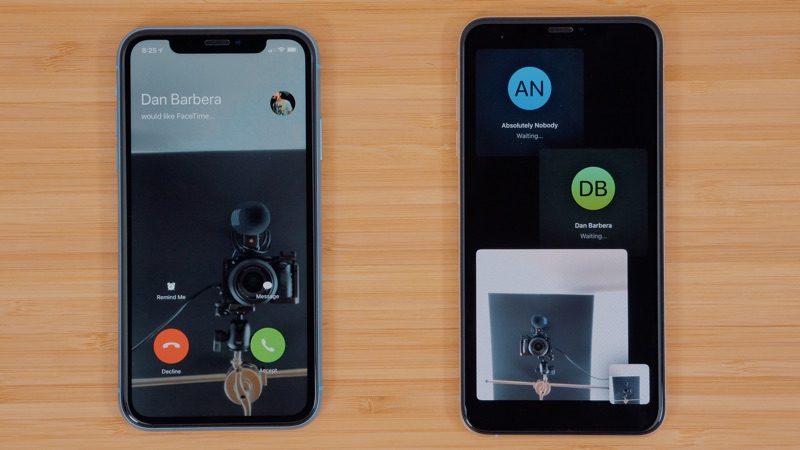
The bug allowed iPhone users to exploit a Group FaceTime flaw that let one person connect to another person and her conversations (and see video, in some cases) without the other person ever having accepted the call.

Apple was first informed of the bug right around January 20 by the mother of a teenager who discovered it, but the company did not begin working on a fix until it went viral and spread across the internet.

Apple has since apologized and said that it is working on a way to better ensure that serious bug reports get to the proper people to prevent such a situation from happening in the future.

With the Group FaceTime servers back online, Group FaceTime is once again functional, but it is now limited to iOS devices that are running iOS 12.1.4 or later. The feature will remain disabled on devices running iOS 12.1.3 and earlier.

Related Roundup: iOS 12

This article, "Apple's Group FaceTime Servers Back Online Following iOS 12.1.4 Launch" first appeared on MacRumors.com

Discuss this article in our forums


from MacRumors: Mac News and Rumors - All Stories http://bit.ly/2UMrvxH

Apple Releases Updated Version of macOS Mojave 10.14.3 With Group FaceTime Bug Fix

http://bit.ly/2HzrwDD

Apple today released a new version of macOS 10.14.3, which is designed to address a major Group FaceTime bug affecting both iOS and macOS. The update comes three weeks after the initial release of macOS Mojave 10.14.3.

The new macOS Mojave 10.14.3 update can be downloaded by going to the "Software Update" section of System Preferences, a new installation method that was introduced with the Mojave update.


While the release notes for the update specify bug fixes, the bug fix in question is the Group FaceTime bug. While not as widely publicized, this issue affected Macs in addition to iOS devices.

The Group FaceTime bug allowed someone to call you through FaceTime and then enter their own phone number again to force a Group FaceTime call. With the Group FaceTime interface activated, the person could hear everything on your end of the phone even if you had never picked up the call.

On your end, it just looked like the Group FaceTime call hadn't been initiated, all while the other person was listening in on what you were saying. After the bug came to light last Monday, Apple took its Group FaceTime servers offline until a fix could be prepared.

With an update now available, Group FaceTime should soon be fully functional and working once again on iOS devices running iOS 12.1.4 or later and Macs running the new version of macOS 10.14.3.

Related Roundup: macOS Mojave

This article, "Apple Releases Updated Version of macOS Mojave 10.14.3 With Group FaceTime Bug Fix" first appeared on MacRumors.com

Discuss this article in our forums


from MacRumors: Mac News and Rumors - All Stories http://bit.ly/2TzTQao

iOS 12.1.4 Now Available With Group FaceTime Bug Fix

http://bit.ly/nvEILJ

Apple today released a new iOS 12.1.4 update for the iPhone, iPad, and iPod touch, with the new software designed to fix an insidious privacy-invading Group FaceTime bug that could be exploited to eavesdrop on conversations.

The new iOS 12.1.4 software can be downloaded on all eligible devices over-the-air using the Settings app. To download it, go to Settings --> General --> Software update.

Subscribe to the MacRumors YouTube channel for more videos.

Though Apple's release notes for the update list "bug fixes" without going into specifics, the issue that's being fixed here is the Group FaceTime vulnerability. After the bug was widely publicized last week, Apple promised a fix, which was delayed to this week.

The FaceTime bug allowed someone to spy on you without your permission or knowledge. By exploiting the bug, a person could initiate a FaceTime call with you and then add themselves to the call again to force a Group FaceTime connection.

When this happened, the bug caused the person to be able to hear the audio on your end, despite the fact that the call was never answered and still looked like a standard FaceTime incoming call interface. In some situations, if you pressed the side button to silence a call, it would even give the person access to your video.

It was a serious bug, so serious that Apple took its entire Group FaceTime server offline as the company took the time to prepare the iOS 12.1.4 update. The Group FaceTime bug was publicized last Monday and Group FaceTime has been offline since then.

The Group FaceTime bug may have required some major under-the-hood changes to FaceTime given that it took Apple nearly two weeks to fix the issue. Following today's update, the Group FaceTime bug will no longer be able to be exploited and Apple will be able to bring its Group FaceTime server back online.

It continues to be unclear just how long the Group FaceTime bug was available for. Group FaceTime was introduced last October, and Apple has not let us know if the bug has been around since that launch date or if it was introduced in a later iOS 12 update.

Related Roundup: iOS 12

This article, "iOS 12.1.4 Now Available With Group FaceTime Bug Fix" first appeared on MacRumors.com

Discuss this article in our forums


from MacRumors: Mac News and Rumors - All Stories http://bit.ly/2DYRzjW