Thursday, February 21, 2019

Apple CEO Tim Cook to Deliver 2019 Commencement Speech at Stanford

https://ift.tt/2E2i3Qb

Apple CEO Tim Cook is set to deliver Stanford's 2019 commencement speech on Sunday, June 16, the university announced today.

Stanford chose Cook because he has been a "prominent voice on ethics in technologies and businesses," with insights into the challenges facing corporations and society today.


According to Stanford, the issues that Cook has raised "dovetail" with the Stanford "Our Vision" planning process which advocates for research on the social and ethical impact of advances in science and tech and makes sure students have the tools to "address societal and ethical impacts of science and technology."
"Tim Cook has spoken forcefully of the challenges and responsibilities confronting corporations and our society today," said Stanford President Marc Tessier-Lavigne. "In tackling these, he has led with vision and values - qualities that reflect the culture of our Stanford community, and that are top-of-mind for our students and our country. Tim was a natural choice to challenge and encourage our graduates as they leave our campus and find their own paths in the world."
Cook said that he was honored to be invited to deliver the commencement address at Stanford.
"It's an honor to have been invited by Stanford's students and faculty, and I look forward to deepening the remarkable relationship that Stanford and Apple have built together over many years," Cook said. "We share so much more than geography. The passion, interests and creativity our institutions have in common have helped to revolutionize technology and reshape the world, and I can't wait to join graduates, as well as their family and friends, in celebrating the even brighter possibilities of the future."
Cook will also be delivering the keynote address to Tulane graduates at the university's 2019 commencement event, which is set to take place on May 18.

In the past, Cook has given commencement addresses at several universities, including his alma mater Auburn University, Duke University, George Washington University, and MIT.


This article, "Apple CEO Tim Cook to Deliver 2019 Commencement Speech at Stanford" first appeared on MacRumors.com

Discuss this article in our forums


from MacRumors: Mac News and Rumors - All Stories https://ift.tt/2GWokjj

Fun iOS Safari Bug Lets You Trick Your Friends With Fake Website Headlines

https://ift.tt/2SkoqDA

You may or may not know this, but there's a feature in Safari that's designed to let you select a portion of text and send it to a friend over Messages using the Share feature in Safari.

When researching one of our tips videos, we came across this handy trick, but soon discovered that there's another aspect to it -- one that you can use to create fake website headlines that can be sent to your friends and family.

Subscribe to the MacRumors YouTube channel for more videos.

As it turns out, there's a bug in the select text and share feature, and it involves the search function on websites. If you type text into the search bar on a website, highlight it, and then share it with the Safari Share Sheet, it will send your written text along with a website link that looks rather official. See the screenshot below:


Here are the specific steps to follow to create a fake website title:

1. Go to a website with a search function, such as MacRumors.com.
2. Make sure your iPhone is in landscape mode.
3. Tap on the search bar.
4. Enter your text and then select it.
5. Tap on the Share icon next to the address bar.
6. Select Messages and then type in the name of the person who you want to prank.

From there, the person will see the fake website header that you created, but it will look like text from the website itself because the text isn't sent separately due to the rich text feature in Messages.

This pretty much only works iPhone to iPhone and won't work if you're sending messages to your friends on Android devices. You can use this trick on the iPad too, but it doesn't work on the Mac.

If you want to use the feature as Apple intended you to do, you can select a bit of text on a website and then send it to a friend to highlight something specific that's worth pointing out. Like in our AirPods roundup, if you wanted to highlight the bit about a new color, you could select it and share the page with this text visible in the link.

It's actually a useful feature that's great for pointing out specific passages in blogs, news articles, and more.

We're pretty sure selecting search text through this feature and sending it over Messages is a bug that Apple will fix at some point, but in the meantime you can have a bit of fun with it and send unique website headlines to friends and family.


This article, "Fun iOS Safari Bug Lets You Trick Your Friends With Fake Website Headlines" first appeared on MacRumors.com

Discuss this article in our forums


from MacRumors: Mac News and Rumors - All Stories https://ift.tt/2T44NnK

Intel Expecting Apple to Transition to Custom ARM-Based Chips Starting in 2020

https://ift.tt/2NkL4uH

Apple is planning to ditch Intel and transition to Mac chips starting in 2020, based on multiple rumors we've heard in the past from Bloomberg. Axios today confirmed Bloomberg's reporting and said that multiple sources have suggested Apple will transition to custom ARM-based chips next year.

According to Axios, developers and Intel officials are expecting Apple to begin using ARM-based chips in 2020.


The move to ARM-based chips is said to be part of Apple's effort to make Macs, iPhones, and iPads work together and run the same apps. Bloomberg earlier this week said that by 2021, Apple wants developers to be able to create one app that will work on iPhones, iPads, and Macs.

Apple's transition to a single app for all devices has already begun. Last year, Apple ported several of its iOS apps, such as Voice Memos, Stocks, and Home, to macOS. This year, Apple plans to let developers transition iPad apps to macOS, and in 2020, that will include iPhone apps. In 2021, then, developers will be able to make just one app that users can download on any of Apple's platforms.

This transition will greatly increase the number of Mac apps available, and it will cut down on the amount of work developers have to put in to create a Mac app. It will also better unify Apple's operating systems across all of its devices.

There have been rumors about Apple transitioning to ARM-based Macs for years now, and they have ramped up given the many Intel chip delays that have resulted in subsequent delays for Mac products. With its own ARM-based chips, Apple will not be tied to Intel's chip release cycles.

Apple already makes its own A-series chips for the iPhone and the iPad, and there are also custom Apple chips in recent Macs -- the T2. The T2 chip, in the iMac Pro and 2018 MacBook Pro, MacBook Air, and Mac mini models, integrates several components including the system management controller, image signal processor, SSD controller, and a Secure Enclave with a hardware-based encryption engine. It powers the Touch Bar in the MacBook Pro and the Touch ID feature in the MacBook Pro and MacBook Air.

Apple is a major Intel customer, responsible for approximately five percent of Intel's annual revenue, so the transition to ARM-based chips will be a major blow for Intel, but a win for customers in the long run. Apple's modern A-series chips for iPhone and iPad are already more powerful than many Intel chips on the market.

Tag: Intel

This article, "Intel Expecting Apple to Transition to Custom ARM-Based Chips Starting in 2020" first appeared on MacRumors.com

Discuss this article in our forums


from MacRumors: Mac News and Rumors - All Stories https://ift.tt/2GDYC40

How to install Android widgets on a Chromebook


via About Chromebooks https://ift.tt/2EmGEAx

Deals: Monoprice Discounts Thunderbolt Cables by Up To 35%, Amazon's Magic Trackpad 2 Sale, and More

https://ift.tt/2Eo6y72

Well-known cable and accessory maker Monoprice today introduced a new sale on Thunderbolt cables, with discounts reaching as much as 35 percent off of original prices during the limited-time event. The retailer offers Thunderbolt cables of various speeds, wattage, and length, affecting the price of each.

The cheapest cable in the sale starts at $13.99, down from $19.99 for the 20 Gbps, 60W, 1.0 meter cable, and prices increase from there. Check out more Thunderbolt cables on sale below and head to Monoprice for the full list (including Thunderbolt 3 and Thunderbolt 2 cables):

Note: MacRumors is an affiliate partner with these vendors. When you click a link and make a purchase, we may receive a small payment, which helps us keep the site running.
Thunderbolt 3 Cables


Magic Trackpad 2


Additionally, Amazon today has marked down Apple's Magic Trackpad 2 (Silver) to $99.00, $30 off from its original retail price of $129.00. This is the lowest the Magic Trackpad 2 has ever been on Amazon, and is the current best price online for a new version of the device among the major retailers.

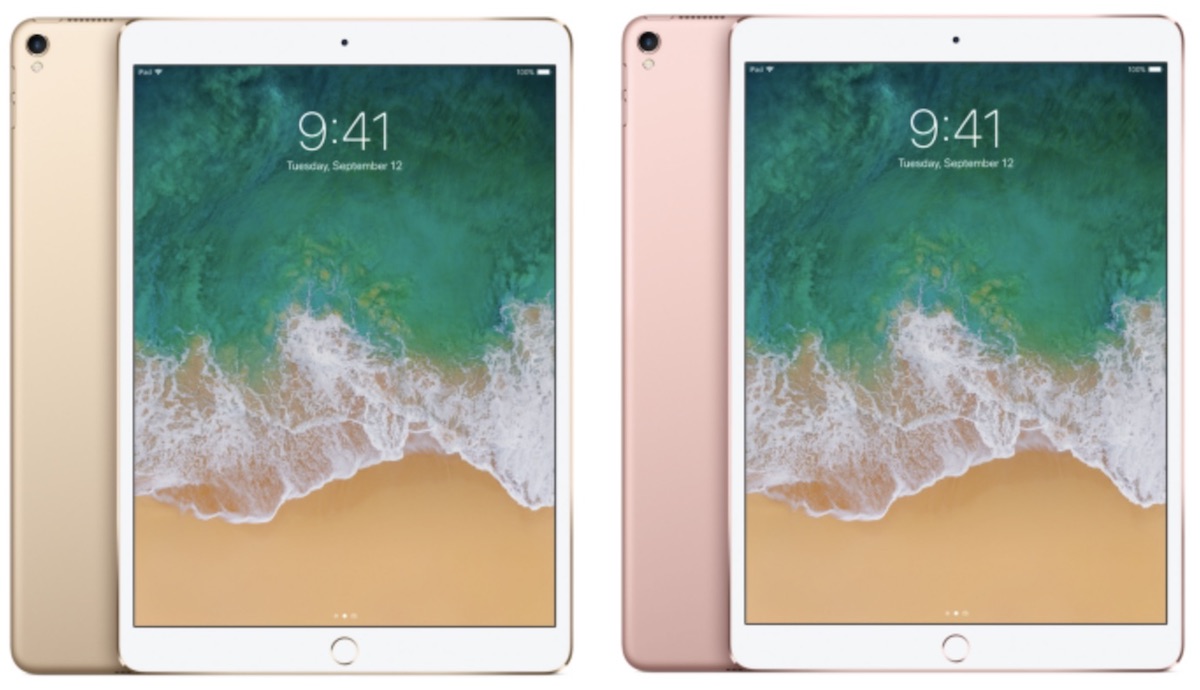
10.5-inch iPad Pro (2017)


Amazon also has a few sales on the previous generation 10.5-inch iPad Pro, marked down by as much as $200. These iPad Pro models launched in mid 2017, include a 10.5-inch Retina Display with ProMotion, an A10X Fusion chip, Touch ID, and a 10 hour battery life.

Anker Discount Codes


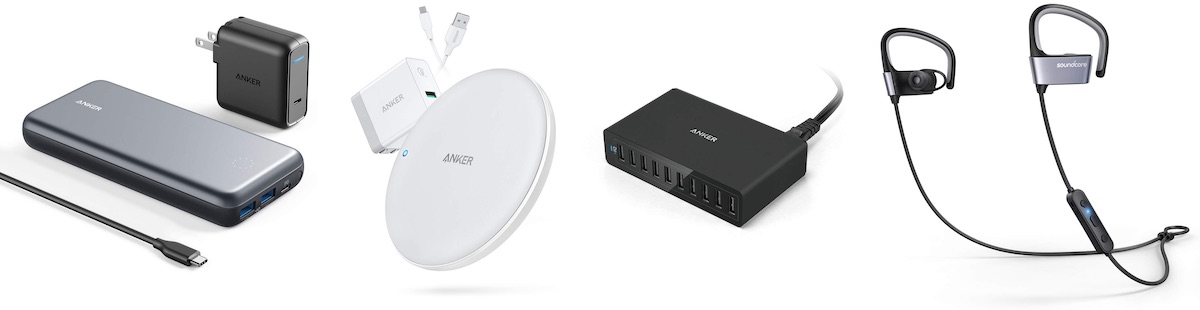
Lastly, Anker has introduced a new set of discount codes as February comes to a close, with savings on portable battery packs, USB-C cables, Bluetooth headphones, and more. You can find the expiration dates for each code below, and remember that to see the discounts you'll have to enter the relevant code during the checkout process on Amazon.


Head to our full Deals Roundup for more information on this week's sales.

Related Roundup: Apple Deals

This article, "Deals: Monoprice Discounts Thunderbolt Cables by Up To 35%, Amazon's Magic Trackpad 2 Sale, and More" first appeared on MacRumors.com

Discuss this article in our forums


from MacRumors: Mac News and Rumors - All Stories https://ift.tt/2Nm6Wpj

iOS 12.2 and Safari 12.1 for macOS Include Updated Intelligent Tracking Prevention Feature

https://ift.tt/28PRJHx

Safari in the iOS 12.2 beta and Safari 12.1 for macOS High Sierra and Mojave includes an updated version of Intelligent Tracking Prevention, according to details shared on Apple's WebKit blog.

ITP 2.1, as Apple is calling it, caps client-side cookie storage to seven days. After this time period, cookies expire. As outlined by Apple, this offers improvements in privacy, security, and performance. From Apple's WebKit blog:
- Cross-site trackers have started using first-party sites' own cookie jars for the purpose of persistent tracking. The first-party storage space is especially troublesome for privacy since all tracker scripts in the first-party context can read and write each other's data. Say social.example writes a user tracking ID as a news.example first-party cookie. Now analytics.example, adnetwork.example, and video.example can leverage or cross pollinate that user tracking ID through their scripts on news.example.

- Cookies available in document.cookie can be stolen by speculative execution attacks on memory. Therefore, they should not carry sensitive information such as credentials.

- Cookies available in document.cookie can be stolen by cross-site scripting attacks. Again, therefore, they should not carry sensitive information such as credentials.

- The proliferation of cookies slows down page and resource loads since cookies are added to every applicable HTTP request. Additionally, many cookies have high entropy values which means they cannot be compressed efficiently. We come across sites with kilobytes of cookies sent in every resource request.

- There is a size limit on outgoing cookie headers for performance reasons, and websites risk hitting this limit when cross-site trackers add first-party cookies. We've investigated reports of news site subscribers getting spuriously logged out, and found that trackers were adding so many cookies that the news site's legitimate login cookie got pushed out.
The cookie storage limits will not log users out as long as websites are using the appropriate authentication cookies because it only affects cookies created through document.cookie.

ITP 2.1 also allows for just a single set of cookies per site rather than multiples, and third party tools with cross-site tracking capabilities need to use the Storage Access API to get cookie access.

Apple says this change simplifies cookie behavior for developers, lowers the memory footprint of Safari, and makes Intelligent Tracking Prevention compatible with more platforms.

A verified partitioned cache for cutting down on cache abuse for tracking purposes is also included, and as we covered earlier this month, support for Do Not Track has been disabled.

Apple says that it is removing Do Not Track because most websites never paid any attention to it since it was opt-in and could be ignored.
The DNT project recently ended without the publication of a standard, in part "because there has not been sufficient deployment of these extensions (as defined) to justify further advancement." Given the lack of deployment of DNT and Safari's on by default privacy protections such as ITP, Safari removed support for DNT so that users are not presented with a misleading and ineffective privacy control that, if anything, only offered additional browser fingerprinting entropy.
Additional details on the Intelligent Tracking Prevention updates being introduced are available via Apple's full WebKit blog post.

Tag: Safari

This article, "iOS 12.2 and Safari 12.1 for macOS Include Updated Intelligent Tracking Prevention Feature" first appeared on MacRumors.com

Discuss this article in our forums


from MacRumors: Mac News and Rumors - All Stories https://ift.tt/2EmzCM9

1Password Optimized For Chrome OS: One Password Manager To Rule Them All


via Chrome Unboxed – The Latest Chrome OS News https://ift.tt/2SONnw2